
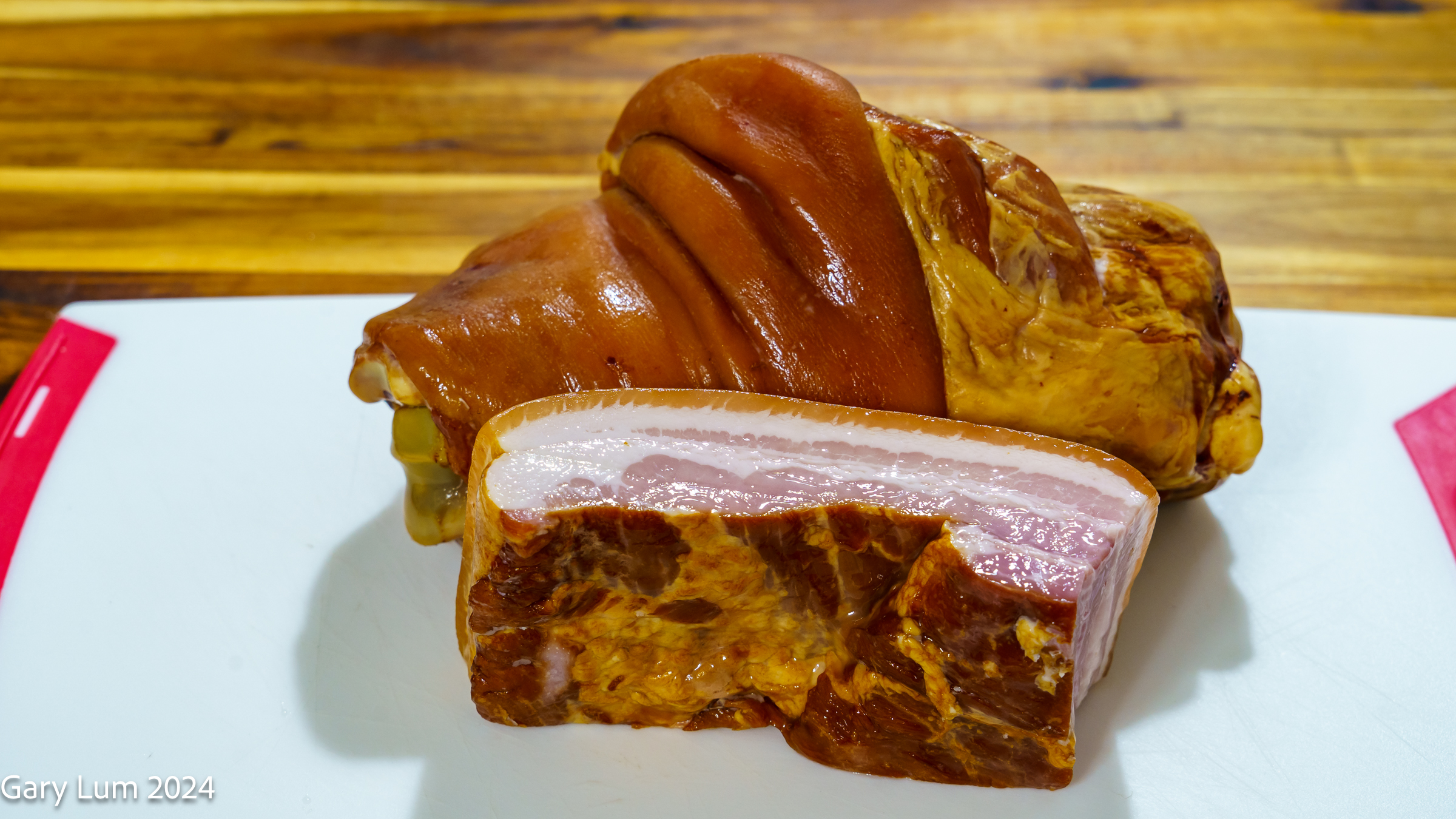
I bought a ham hock from my local Drakes supermarket and some speck from Woolworths.

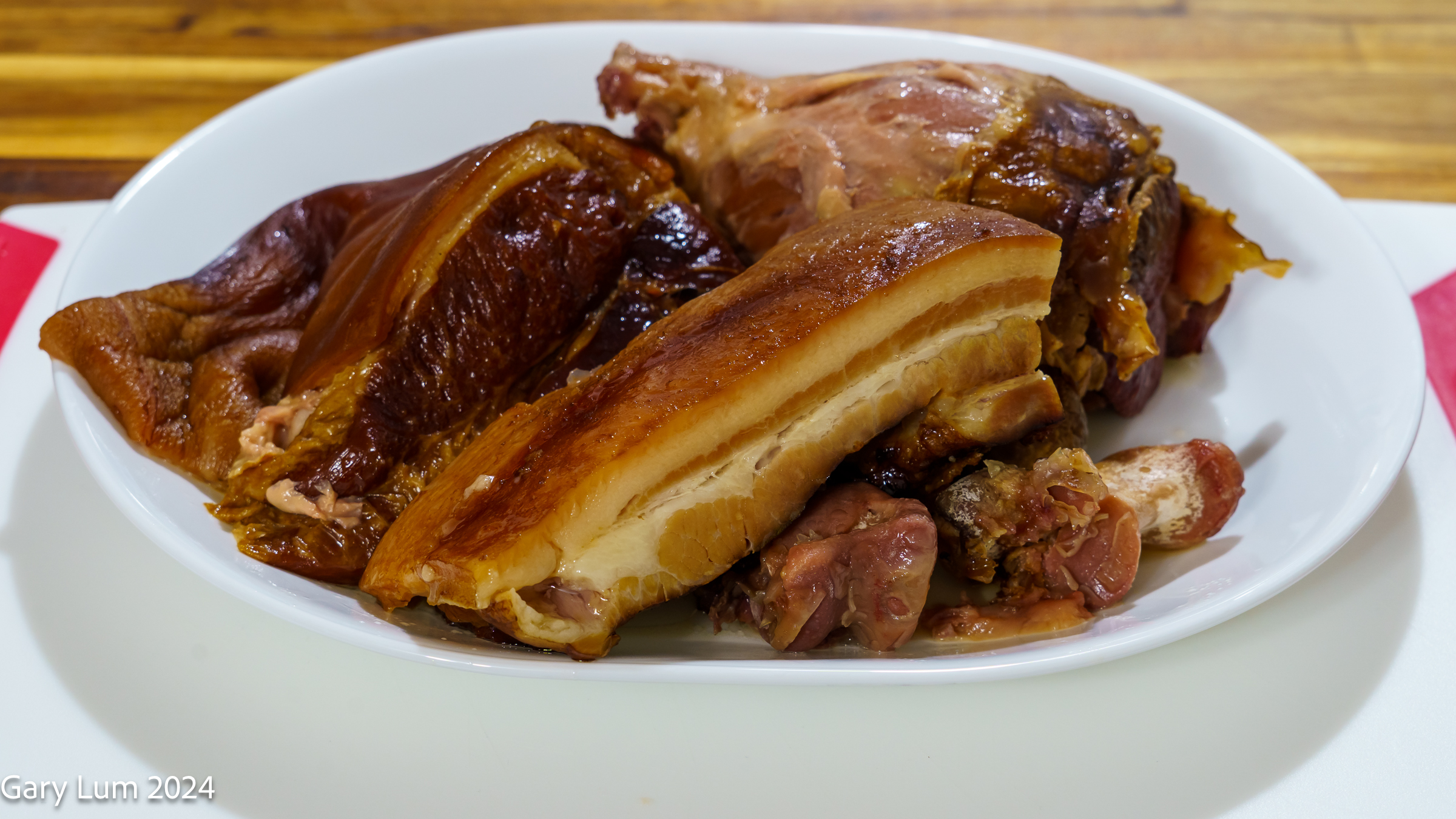
I cooked the pork products in my slow cooker for eight hours.
The hock meat was easily pulled from the bone. The speck was falling apart.
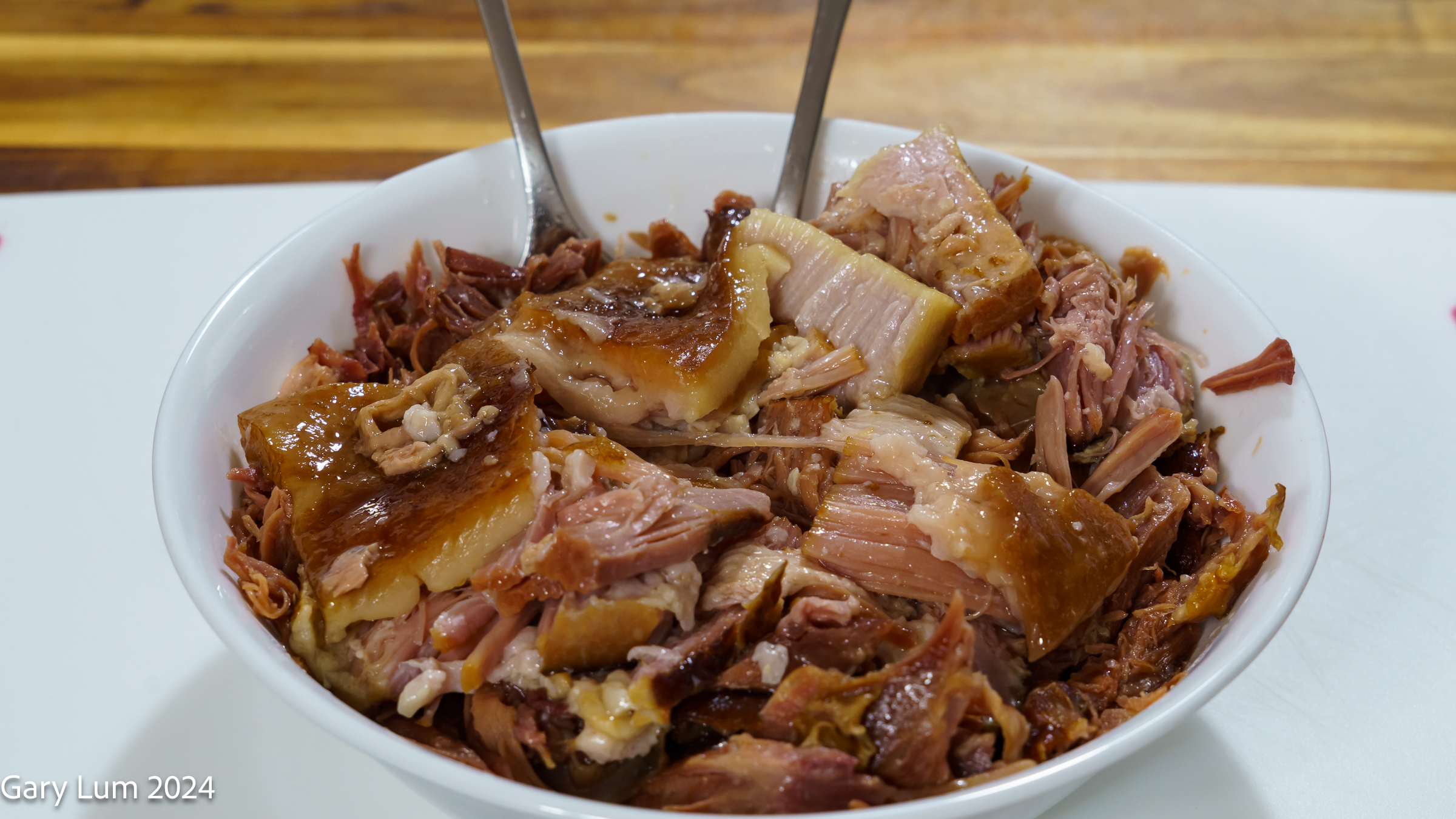
I pulled the meat with two forks.
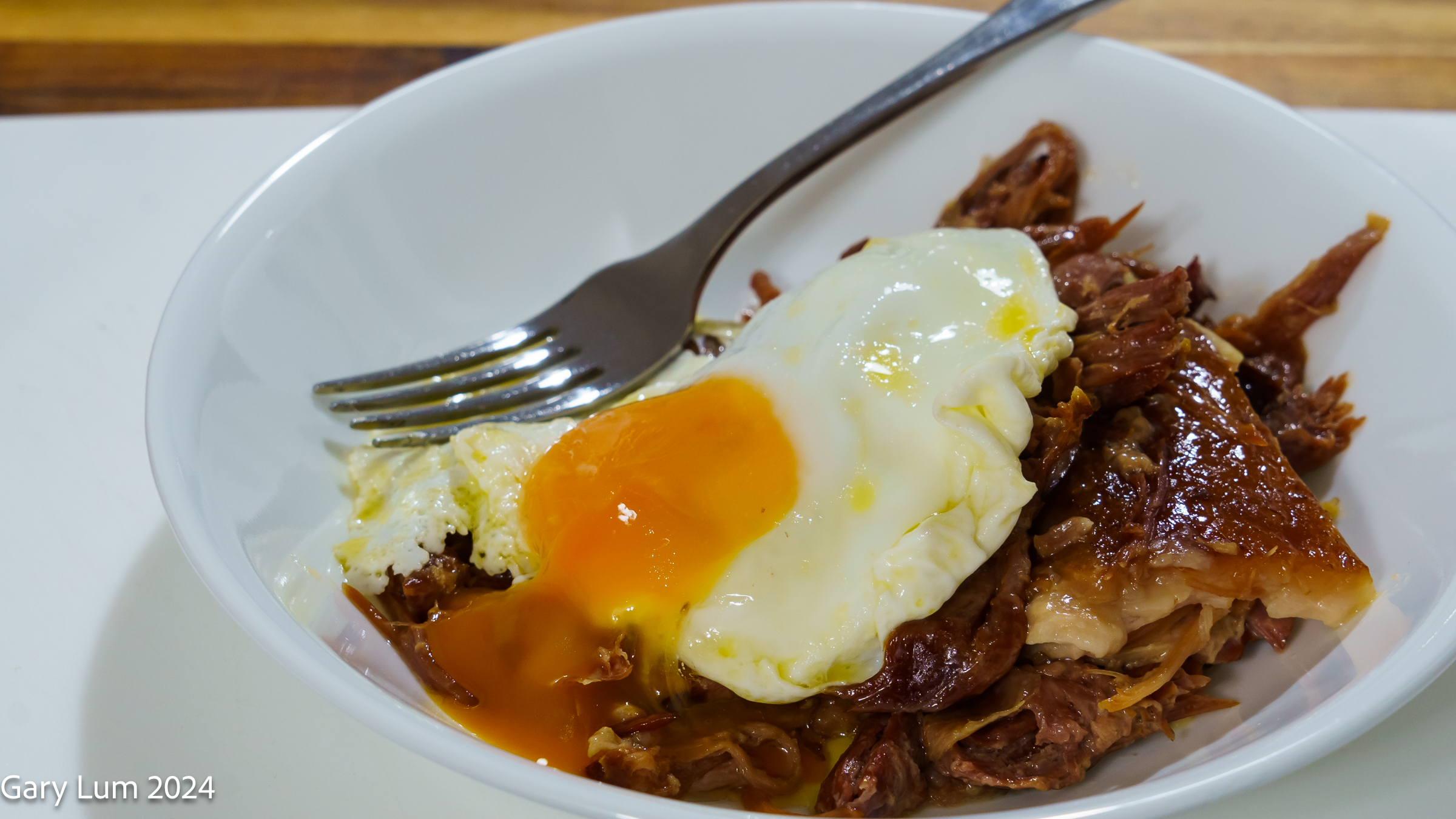
To complete the dish, I fried an egg in butter and used the yolk as a sauce for the meat.


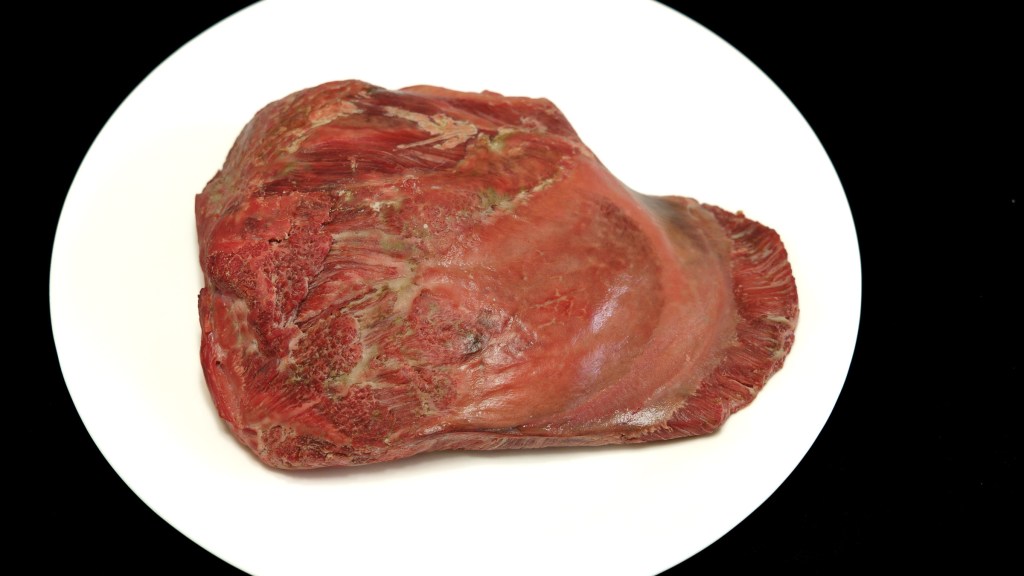
Ham hock
A cured ham hock, also known as a pork knuckle, comes from the area of the pork leg closest to the foot. It’s the joint that connects the leg to the foot. The knuckle has little meat and is encased in fat, tendons, and ligaments surrounded by a thin layer of skin. Ham hocks infuse flavour into dishes. When cooked, the connective tissue breaks down to create collagen and gelatine, thickening the cooking liquid. They’re generally referred to as ham hocks when they’re cured with salt (similar to bacon) and smoked to create a deeply rich flavour.
A ham hock, is most often used to make soups or stocks because it needs to be simmered for hours to break down and soften. The little meat that exists on the joint is sometimes shredded and added to the soup, but the hock is often used as a flavouring agent only. After the collagen and fat dissolve into the cooking liquid, the skin and bones are discarded.
In terms of nutritional values, 100 grams of ham hock contains 328 calories, 28 grams of protein, 23 grams of fat (of which 8 grams are saturated), 0 grams of carbohydrates, 109 milligrams of cholesterol, 250 milligrams of sodium, and 367 milligrams of potassium.
The curing process for ham hocks typically involves soaking the meat in a brine solution to enhance its flavour and extend its shelf life. The brine is typically made up of water, salt, sugar, and other seasonings like bay leaves and peppercorns. Curing salt, which contains sodium nitrite, is also added to the brine to prevent bacterial growth and preserve the meat’s colour.
Speck
Speck is a type of cured, lightly smoked ham, made in South Tyrol, a province in northeast Italy. It’s similar to prosciutto crudo. The meat is carefully rubbed with a spice mix, usually including salt, pepper, juniper berries, and bay leaves. The pork thighs are left to marinate in their spice rubs in cool rooms for up to three weeks. The smoking process, incorporates smoke, and fresh mountain air. The hams are aged for about 22 weeks in cool, well-ventilated rooms.
In terms of cooking and eating characteristics, speck is deeply red and more firm in texture than prosciutto. Since it’s a cured meat, it can be sliced thin and eaten raw in an antipasti platter, wrapped around sweet fruits, or layered on sandwiches. It also holds up well in cooking, giving dishes a smoky flavour similar to bacon but without a lot of extra rendered fat.



Ask a question or make a comment