
Reverse searing is a cooking technique that involves two main steps: slow roasting followed by high-heat searing.
- Slow Roasting: Cook the beef at a low temperature in the oven (usually around 93–135 °C). This slow roasting allows the meat to cook evenly from edge to edge.
- Resting: After reaching the desired internal temperature (which varies depending on how you like your beef cooked), the meat is removed from the oven and allowed to rest. This resting period allegedly lets the juices redistribute throughout the meat.
- High-Heat Searing: Sear the meat briefly on a hot pan or grill. This step creates a caramelised crust on the outside of the beef.
The reverse searing technique is particularly suitable for thicker cuts of beef such as scotch fillet (also known as ribeye), sirloin, T-bone, and filet mignon. These cuts have enough fat and are thick enough to withstand the slow roasting process without drying out.
Beef cooked by reverse searing tends to have the following eating qualities and characteristics:
- Even Cooking: The slow roasting process allows the beef to cook evenly, so you don’t end up with a steak that’s overcooked on the outside and undercooked in the middle.
- Juiciness: The resting period allows the juices to redistribute, resulting in a juicier steak.
- Flavourful Crust: The high-heat searing creates a caramelised crust that adds mouthfeel and flavour.
The benefits of reverse searing compared with other cooking techniques include:
- Controlled Cooking: Reverse searing gives more control over the cooking process to achieve the desired level of doneness.
- Improved Texture and Flavour: The slow roasting and high heat searing enhance the texture and flavour of the beef.
- Flexibility: The resting period provides some flexibility. If your guests are late, you can hold off on the searing step until they arrive.
Like any cooking technique, practice makes perfect. 🥩🍴
Sous vide is a French term that translates to “under vacuum”. It’s a cooking technique that involves three main steps:
- Vacuum Sealing: The beef cut is seasoned and placed in a food-safe plastic bag that is then vacuum sealed to remove all air.
- Precise Temperature Cooking: Submerge the sealed bag in a heated water bath to an exact temperature (usually between 55–60 °C for beef). The meat cooks slowly at this controlled temperature for an extended period, often several hours.
- Searing or Finishing: After the sous vide cooking process, the beef is usually seared on a hot pan or grill to create a caramelised crust.
Sous vide is suitable for most cuts of beef, but it’s particularly beneficial for tougher cuts like chuck, brisket, and short ribs. Cook these cuts for hours to break down the tough connective tissue, resulting in tender, flavourful beef.
Beef cooked by sous vide tends to have the following eating qualities and characteristics:
- Even Cooking: Cook the beef at a precise temperature; it’s cooked evenly from edge to edge.
- Tenderness: The slow, low-temperature cooking process can make even tough cuts of beef tender.
- Juiciness: Sous vide cooking helps the beef keep its natural juices, producing a juicier piece of meat.
The benefits of sous vide compared with other cooking techniques include:
- Precision: Sous vide allows for precise control over the cooking temperature, making achieving your desired level of doneness easier.
- Consistency: Precise temperature control also means you can consistently achieve consistent results.
- Flexibility: Because the cooking process is so slow, there’s less risk of overcooking. Slow cooking gives you more flexibility in terms of timing.
Regarding food safety and pasteurisation, sous vide cooking can be very effective. Harmful bacteria can be effectively eliminated because of the long cooking time at a controlled temperature, making the beef safe to eat. However, it’s important to note that the temperature must be high enough to kill bacteria and cooked for long enough to ensure pasteurisation.
Comparisons
On Friday night I cooked a scotch fillet steak by reverse sear. Tonight, I cooked a scotch fillet steak in a water bath.
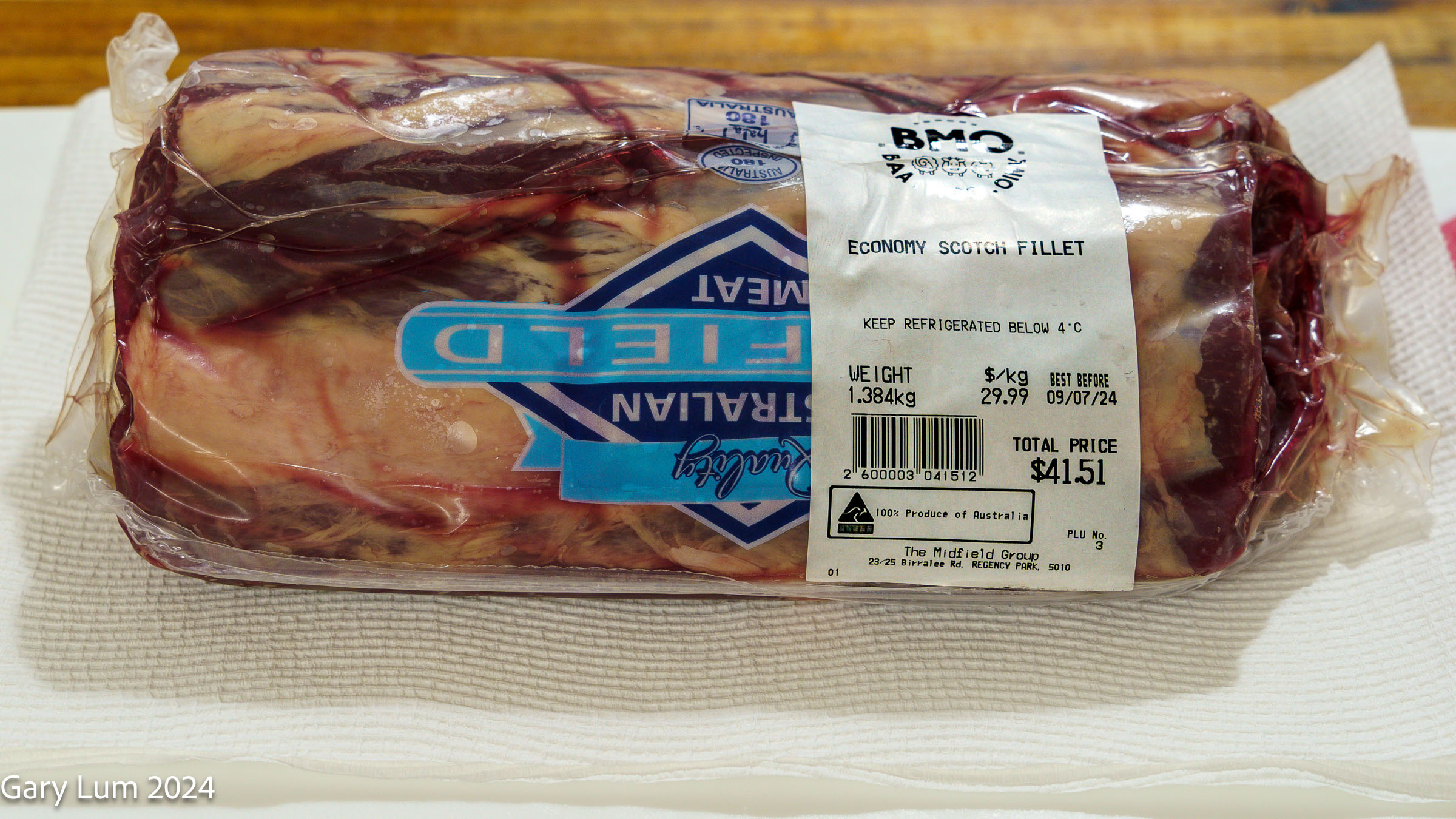
The original piece of meat was bought from a local butcher. It was twice as expensive as a similar piece I bought from a supermarket last week.


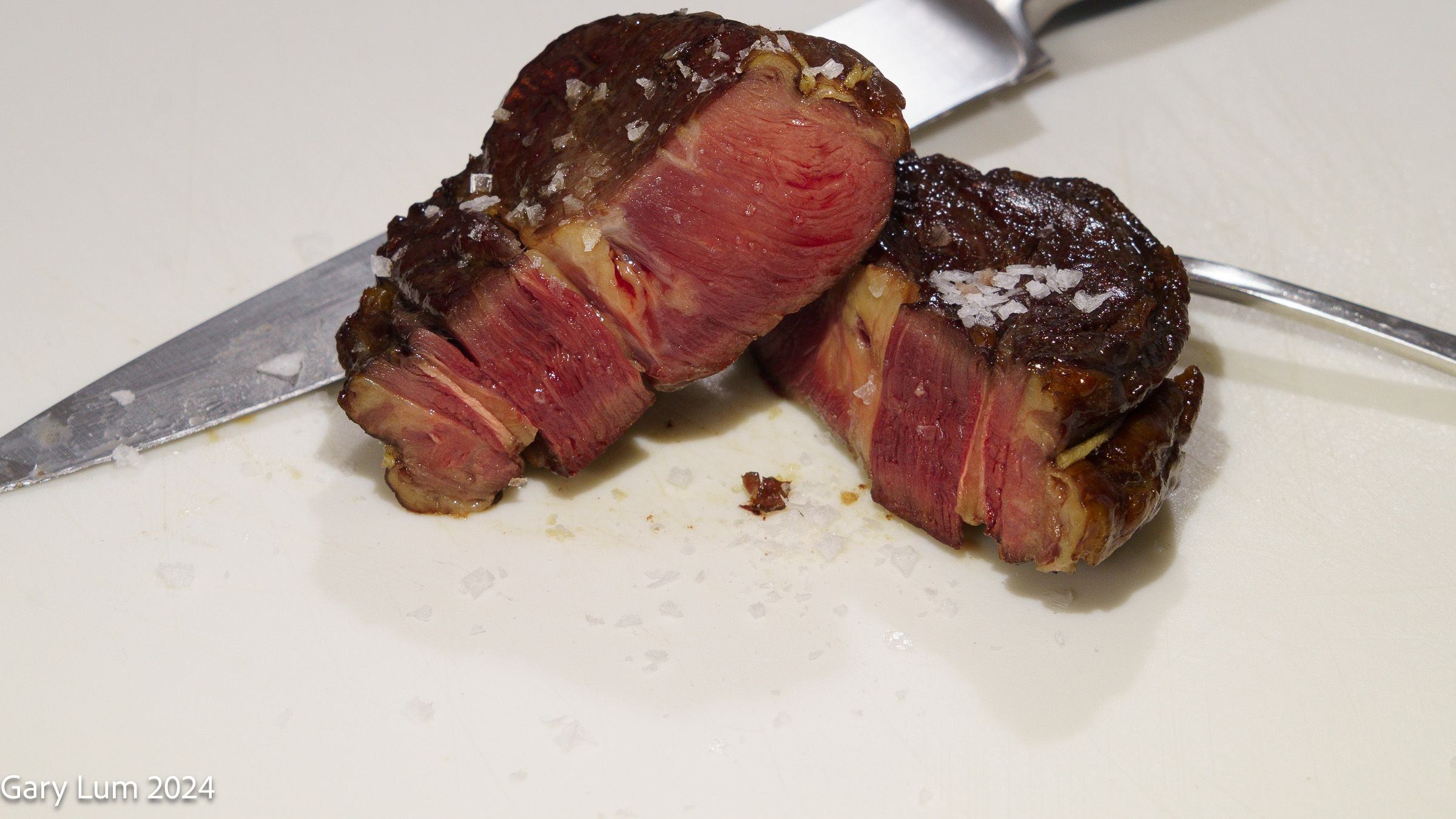
Reverse sear
- Cut a slice from the bulk scotch fillet.
- Place it uncovered on a rack in the refrigerator overnight.
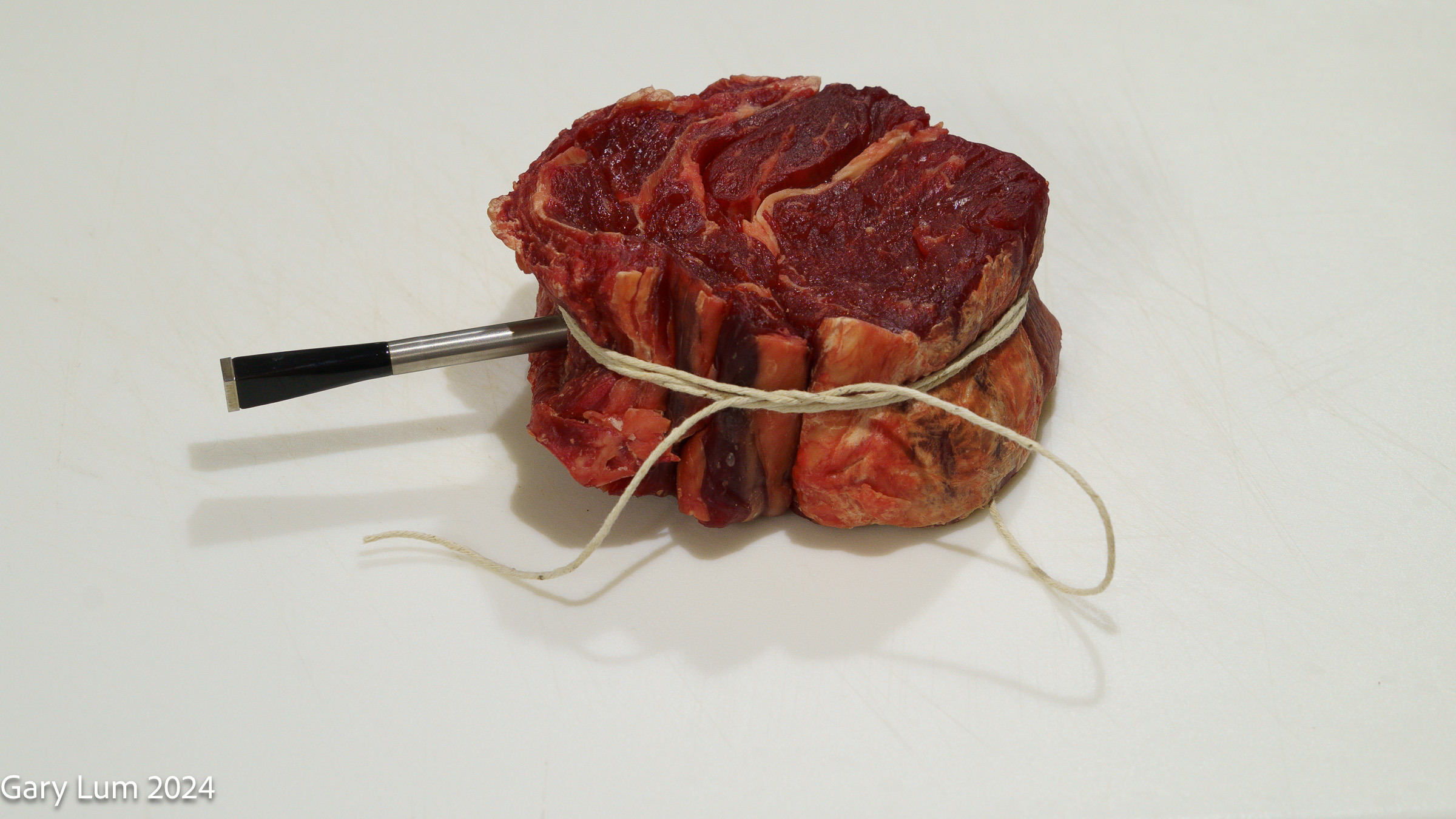
- Use cooking twine to truss the meat.
- Insert a meat thermometer and place in an oven at 120 °C and cook until the centre of the meat is about 53 °C.
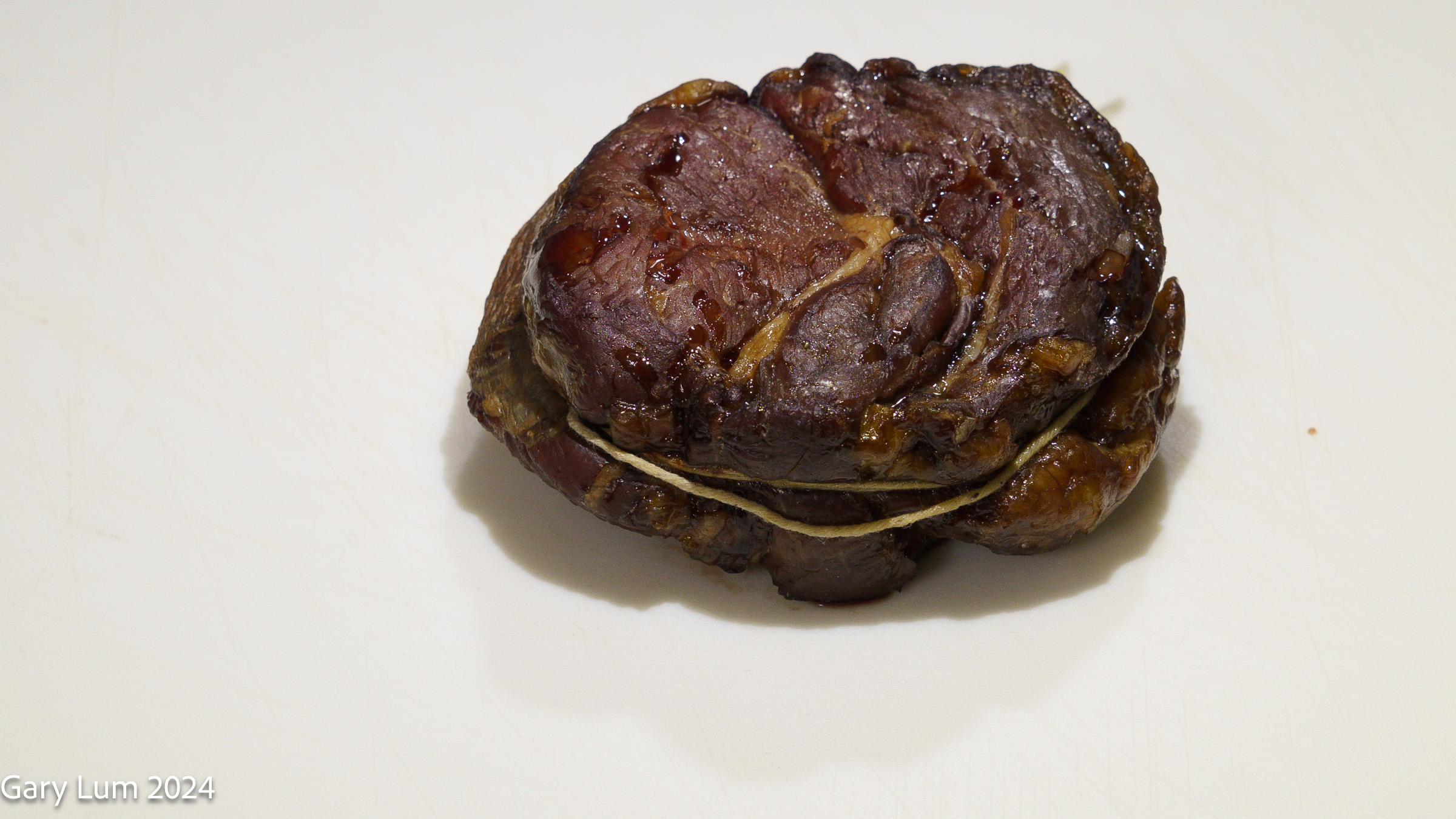
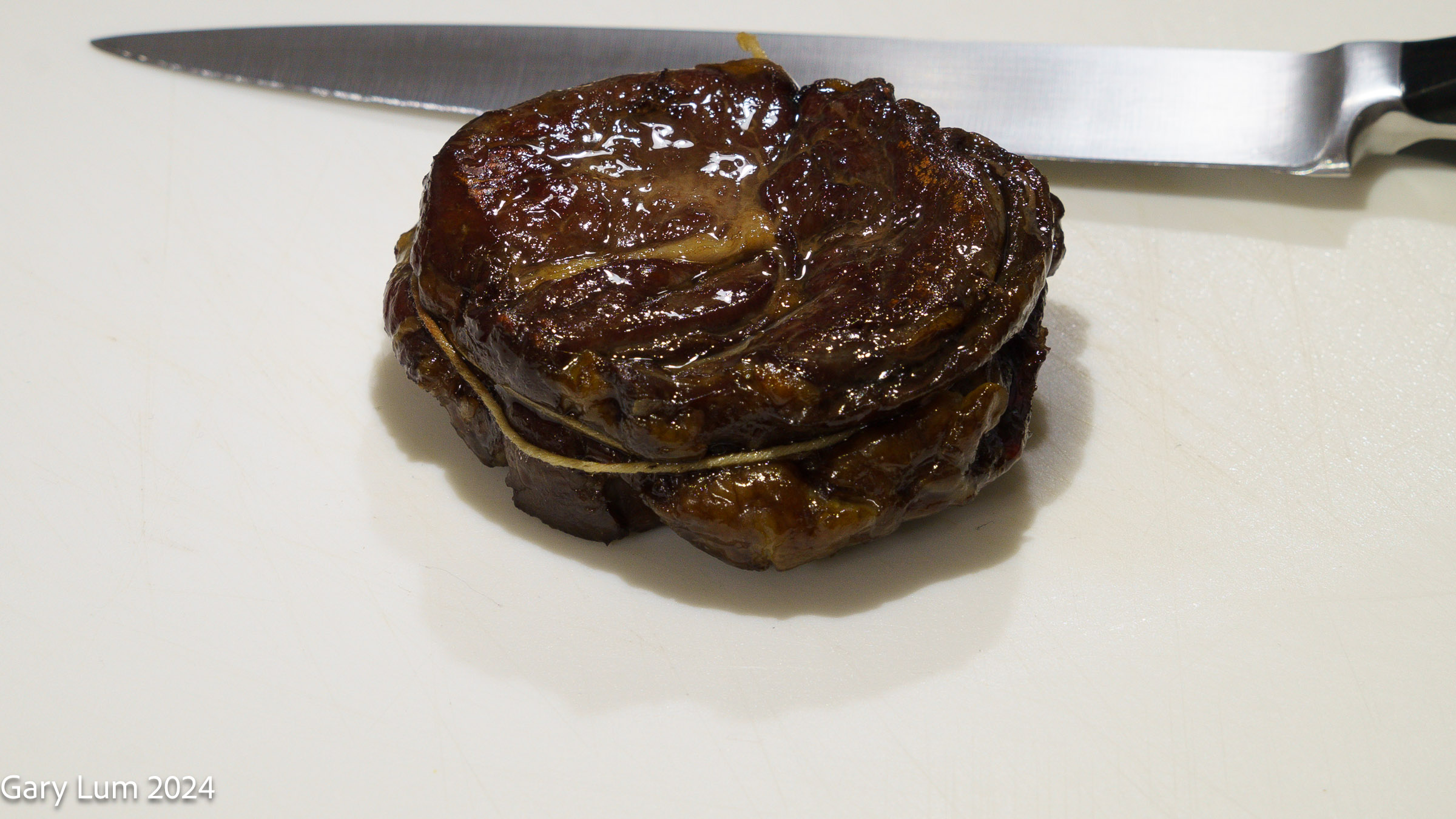
- After the meat has rested for a few minutes, sear each side in a hot frypan.
- Slice the steak and season with flaky salt.

Sous vide
- Cut a slice from the bulk scotch fillet.
- Place it uncovered on a rack in the refrigerator overnight.
- Seal in a vacuum bag.
- Cook in a water bath at 57 °C for 3 hours.
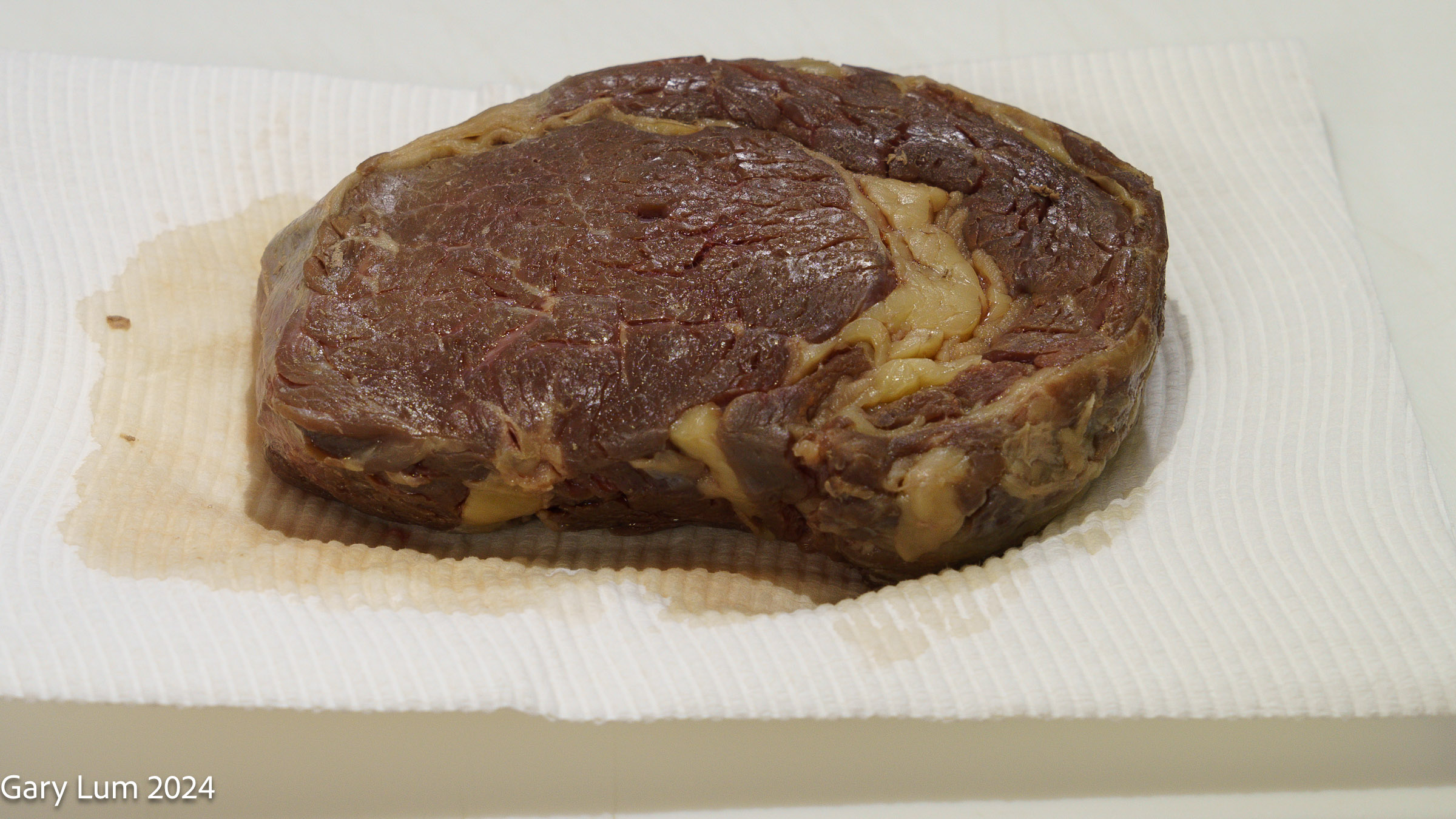
- Remove the steak from the bag.
- Dry the surface of the steak with kitchen paper.
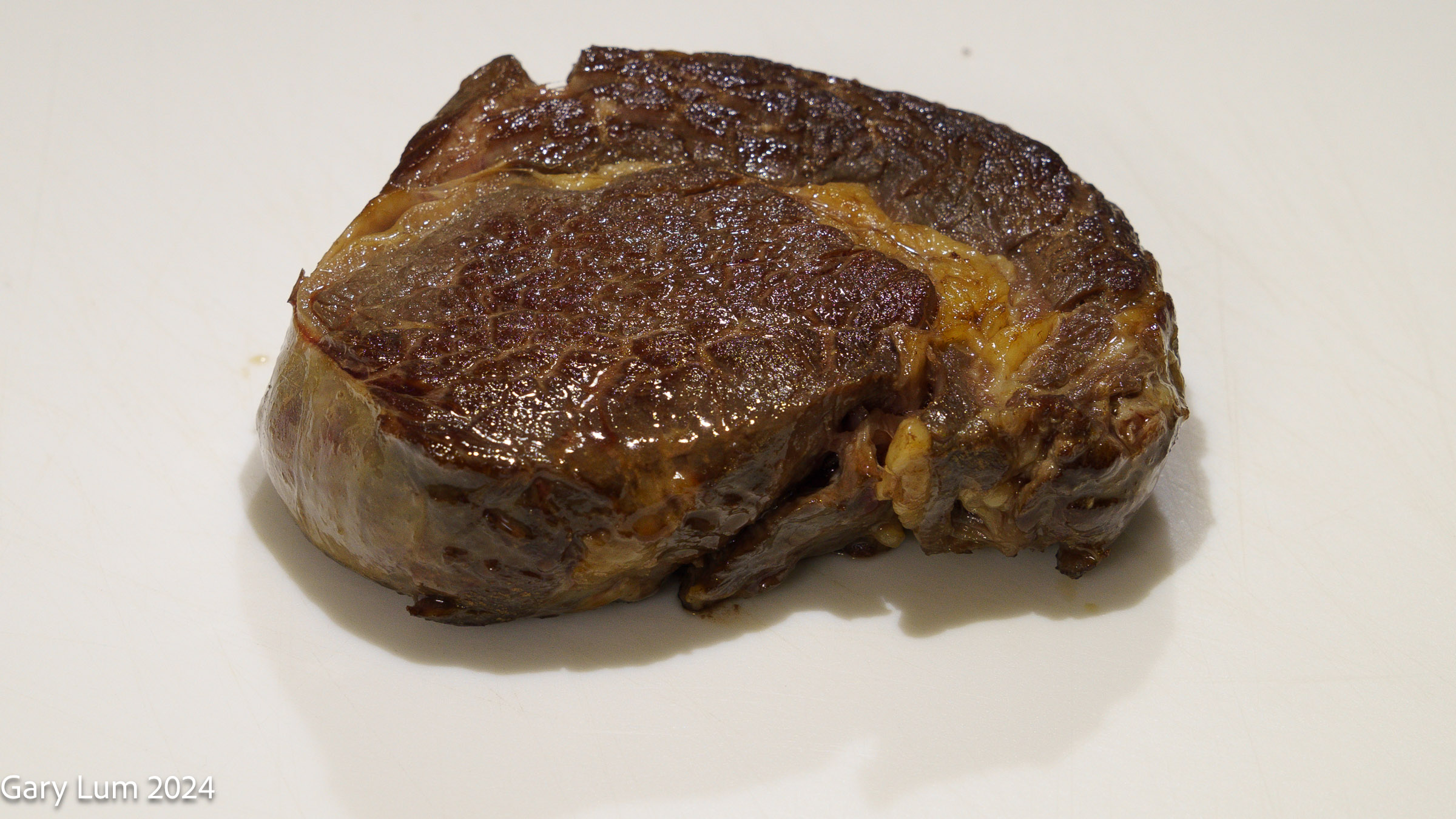
- Sear the steak in a hot frypan.
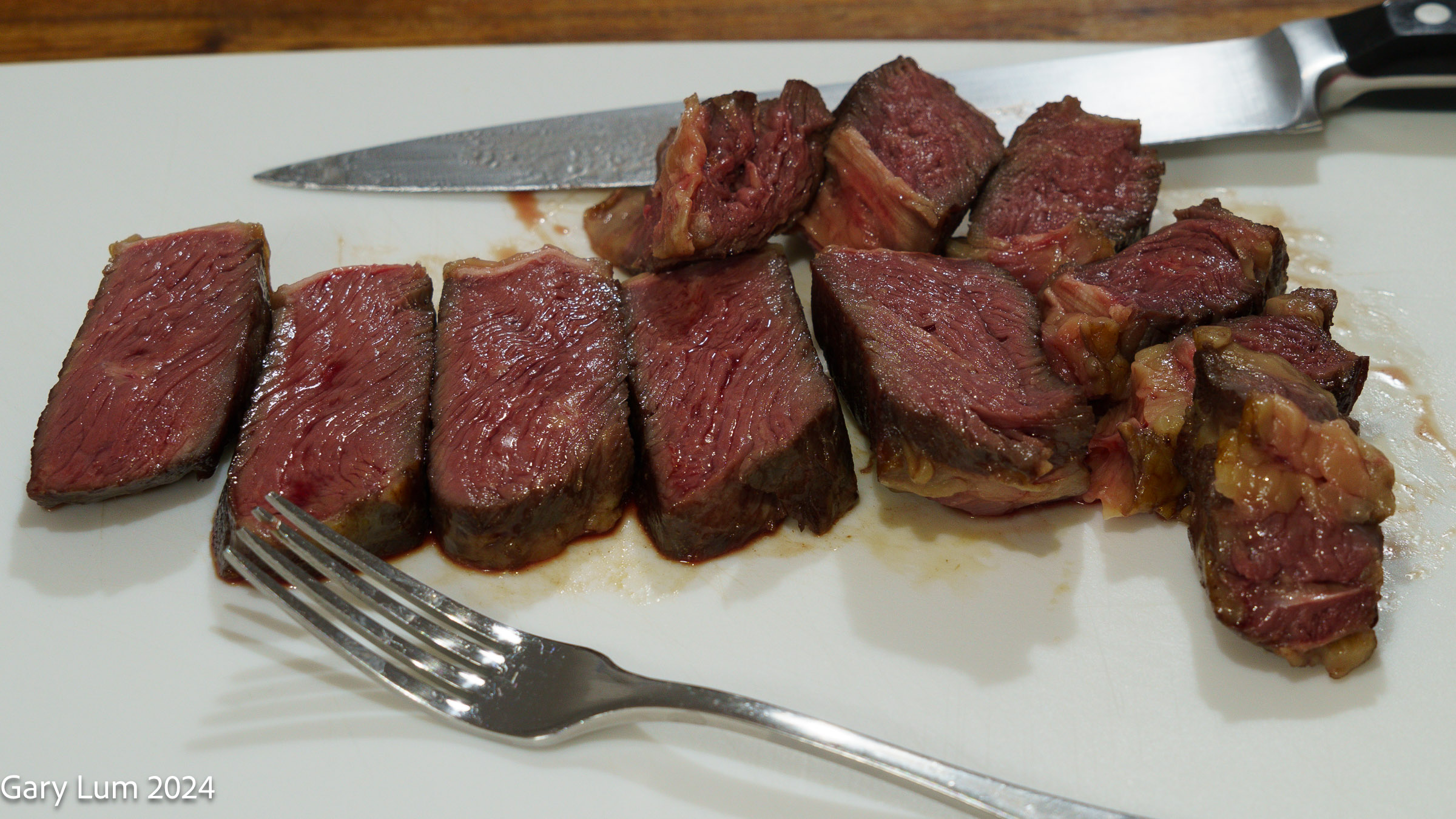
- Slice the steak and season with flaky salt.

Evaluation
Both steaks were excellent. There was no discernible difference in quality.
The advantage of reverse searing is that it’s a faster process; however, if you’re busy, using a water bath gives an equally good result with less need for close observation.



Ask a question or make a comment