
Drakes Supermarkets is a privately owned Australian independent retail chain based in South Australia. It was named after Roger Drake, who opened the first store in Mitcham, Adelaide, in 1974. Since then, Drakes has expanded to become one of Australia’s largest independent supermarket chains, running over 60 Queensland and South Australia stores.
Roger Drake’s journey began with a modest three-aisle supermarket in Mitcham known as “Jack and Jill’s.” He bought the store for just $AUD29,000 and employed four people. The success of that store led him to buy his second supermarket in Torrensville in 1977, marking his first full-size supermarket venture.
Drakes grew, eventually owning 27 Foodland stores in South Australia, three Timesavers stores, six Queensland stores, four news agencies, a liquor outlet, and a substantial property portfolio by 2005. The acquisition of Davids and Franklins supermarkets in SA and six Queensland stores further fuelled the expansion.
In 2013, Drakes set up a meat processing centre in Beverley, Adelaide, South Australia, ensuring quality control for their meat products. By its 40th year of operation, Drakes achieved an impressive annual turnover of $1 billion. They also bought Wilson’s Fresh Produce in Brisbane, doubling Wilson’s sales and solidifying their presence in Queensland.
Drakes Supermarkets is still family-owned and run. Its strong focus is on providing trusted brands to customers across South Australia, Queensland, and through its online platform.
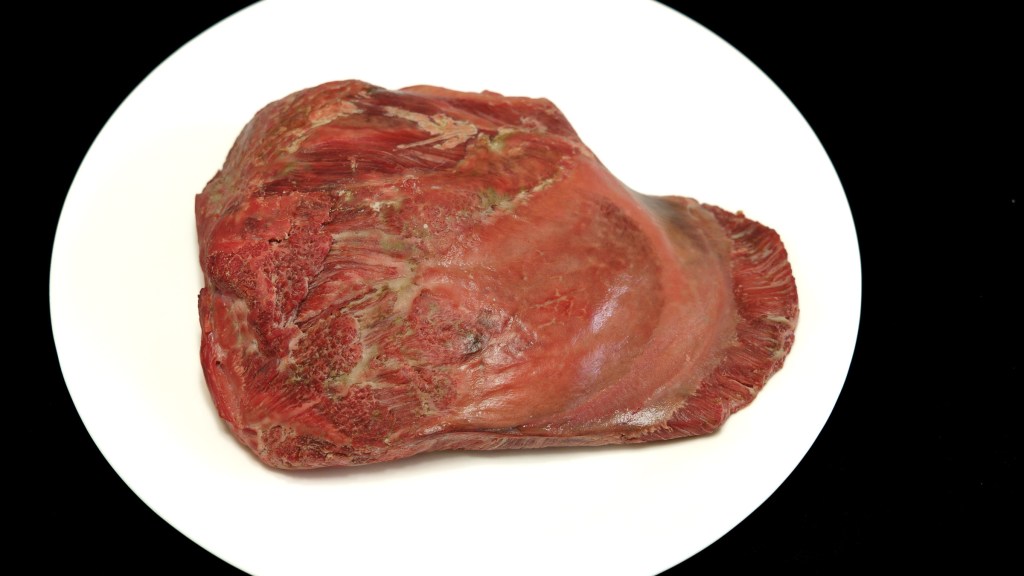
I bought this piece of meat from my local Drakes.
Dry-aged beef
Dry-aged beef is a culinary technique known for its unique flavour and tenderness. The dry-ageing process is an artisanal method where whole beef cuts are left to rest in a controlled environment for a set period of time, typically ranging from 14 to 100 days. This technique allows for the breakdown of tough connective tissues and the evaporation of moisture, resulting in tender and flavourful steak.
The benefits of dry-ageing beef include:
- Enriched Nutrient Profile: Dry ageing concentrates the beef’s natural flavours and nutrients. As moisture is released, the remaining meat becomes denser and richer in essential nutrients.
- Increased Digestibility: The enzymatic breakdown that occurs during the dry-ageing process not only tenderises the meat but also eases its digestibility.
- Lower Fat Content: As dry-aged beef loses moisture, it also loses some of its fat content.
- Enhanced Flavour Profile: The unique and savoury flavour profile.
The ageing process intensifies the beef’s taste, creating a more robust, concentrated flavour profile characterised by nuttiness, richness, and a distinct umami quality. The breakdown of connective tissues by natural enzymes also enhances tenderness, offering a melt-in-your-mouth texture.
It’s useful to select beef from reputable sources that adhere to high hygiene and ageing standards. Look for specialty butcher shops or high-end grocers focusing on ethically raised, grass-fed cattle.
Dry-aged steak promises delicious meat and health advantages. Thanks to its enriched nutrient density, increased digestibility, and lower fat content, it makes for a nourishing and satisfying meal.
Ingredients
- 40-day dry-aged ribeye bone-in — 380 grams ($AUD23)
- Salt
- Black pepper
- Butter — salted.
Equipment
- Precision cooker
- Water bath
- Barbecue grill
- Gas torch
Instructions
- Unwrap the steak from the plastic vacuum packaging.
- Season the meat with salt and freshly ground black pepper.
- Put the seasoned beef into a vacuum bag and vacuum seal.
- Cook the meat for 3 hours at 57 °C.
- Remove the meat from the vacuum bag and dry the beef with absorbent paper.
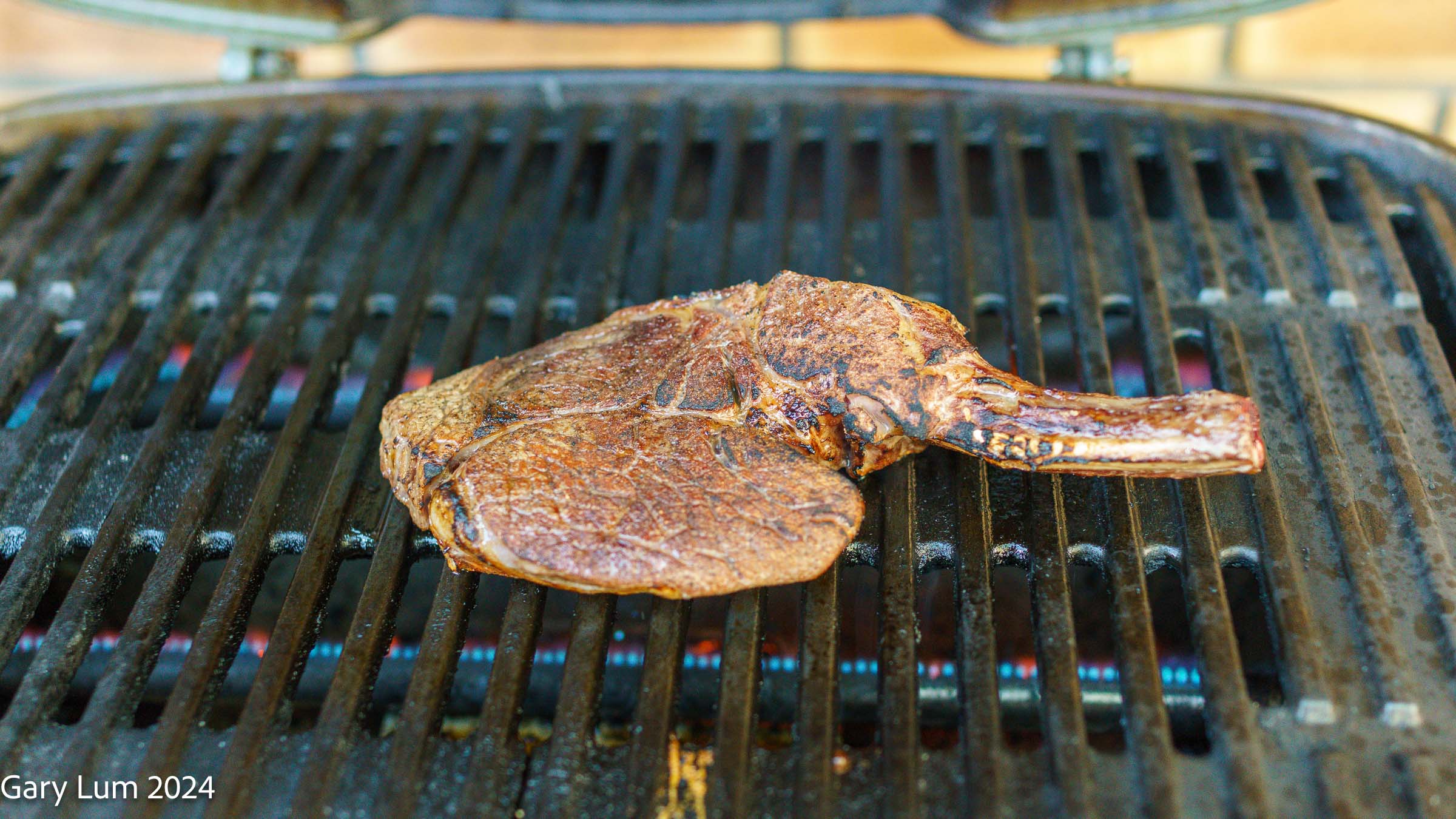
- Heat the barbecue grill and sear the meat on the grill and with a gas torch.
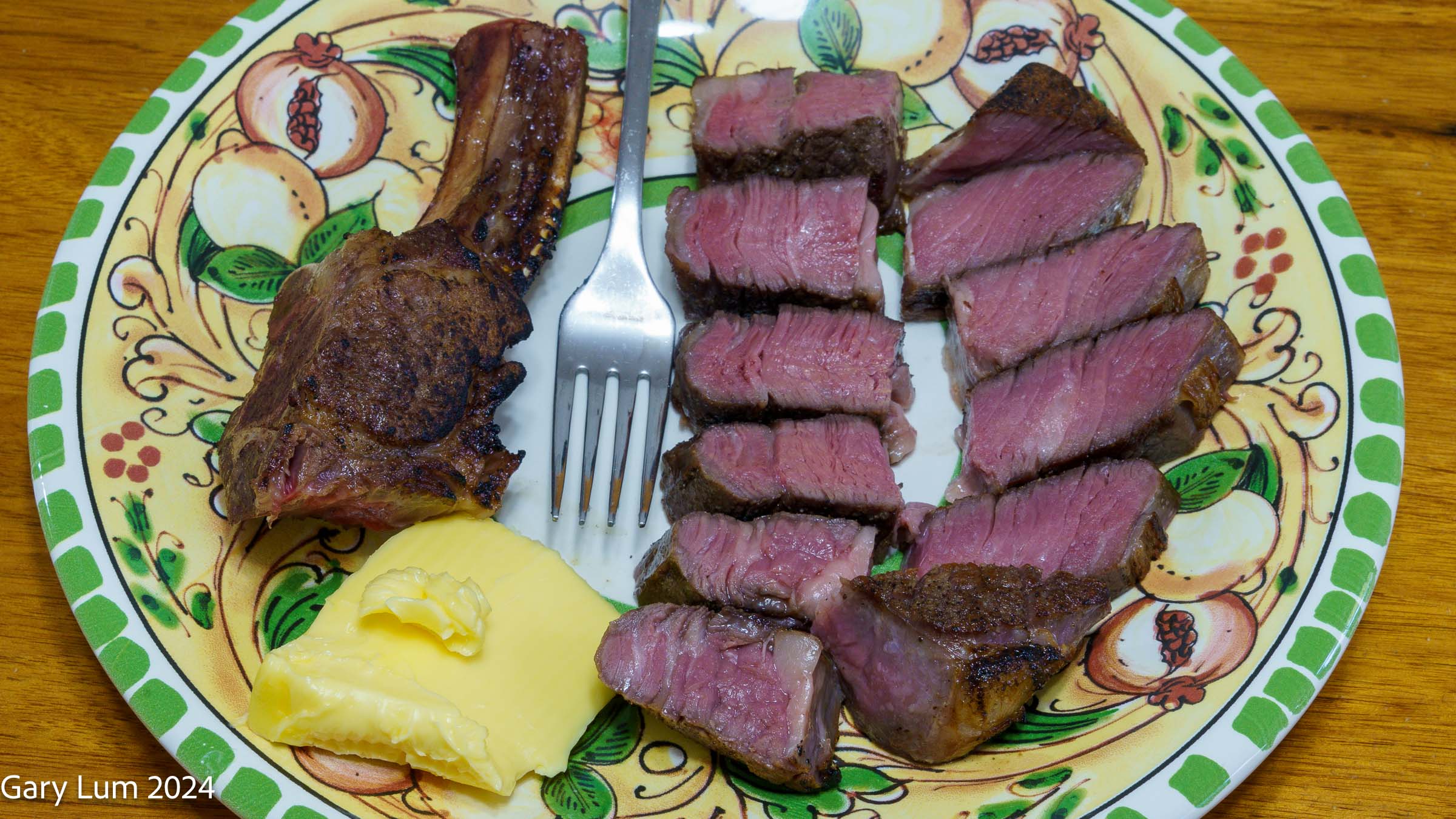
- Slice the steak.
- Serve the steak with butter.
Photographs


Today’s coffee



Ask a question or make a comment